


As Ukraine faces mounting debt and uncertain recovery, a new kind of loan could offer vital relief, one that grows with the economy and waits till it can pay, write DrJan LibichandBruce Chapman.
THE WORLD has rallied behind Ukraine in its fight for sovereignty. However, the financing of its military efforts has been a challenge, with aid fatigue apparent on the part of Western governments. One of the heated topics was the type of war assistance. Upon taking office, PresidentTrumpcomplained that the U.S. has beenproviding grantsto Ukraine, whereas the EU has been giving loans (for the exact numbers, see the tracker by theKiel Institute).
These EU loans have the novel feature that repayments will come from the returns to Russian financial assets located in these countries. As such, they are more accurately described as involuntary grants from Russia. While important in the short run, at some point, this type of assistance will be exhausted. Further, when the war eventually comes to an end, Ukraine will require considerable financial support to rebuild its physical and human capital.
With respect to both the war and post-war reconstruction financing, consideration is needed for alternative loan arrangements.
Putins war grows more savage as foreign allies join fightAs Ukraine reels from chemical attacks, torture and child abductions, Putin deepens the horror by recruiting foreign forces to join his bloody crusade.
A way to proceed would be with familiar sovereign debt loan assistance, involving loans requiring set repayments over a specified period, assisted with interest rate subsidies. We put forward a superior alternative:HECS-type loans that are more like grants when a country experiences difficult times. We call them GDP-contingent loans with their key feature being that repayments are linked to the level and the growth rate of the recipients real annual GDP. As such, they follow the repay-when-you-can principle used successfully since 1989 in Australian higher education student loans, and many other countries since then.
We explain below why GDP-contingent loans would be beneficial to all parties, with more details and quantitative assessment appearing in our paper, forthcoming in the journalWorld Economics.
When Australian, English or New Zealand students embark on their university journey, they benefit from a government income-contingent loan scheme, which is very different from standard (mortgage-type) loans. First, loan repayments are only required once the graduate has reached a certain level of annual income. Second, above this threshold, the repayments depend on the graduates monthly income; they are not a fixed amount. This means that the graduate may repay less or even zero when experiencing a decline in income; the difference is made up by them repaying more in periods of high income.
GDP-contingent loans apply the same logic and we note that the financial constraints of many fresh graduates starting out in life are analogous to those faced by a country in crisis/war or recovering from these traumas. In terms of the no-repayment threshold, we suggest that repayments not be required until real GDP returns to the pre-war level (for example, Ukraines real GDP in 2021). Above that level, we argue for the annual repayment to be a certain percentage (such as 35% or 50%) of that years increase in real GDP.
The generic approach means that if the recipient economy experiences an economic boom, loan repayments are higher than they would be under a standard loan. Conversely, repayments are reduced or fully paused during economic downturns, resuming when the recipient countrys economy is strong enough to bear the burden. Importantly, repayments do not start until recovery from the war is achieved, which has the added advantage of avoiding the sorts of dire effects that can be associated with loan burdens immediately after crises end.
Given Ukraines extraordinarily high wartime budget deficits of 15-20% of GDP in 2023 and 2024, standard loan repayments would further and greatly strain public finances, increasing the risk of immediate financial distress and default. And Ukraines financial needs are significant.
Russia plans for further offensives, not peaceAmid calls for peace and an end to the war between Russia and Ukraine, Vladimir Putin is stepping up his offensive campaign and expanding his military might.
The Kiel Institute estimates that (as of late February 2025) approximately 267 billion (AU$477.6 billion) in direct assistance has been allocated to Ukraine since the Russian invasion three years prior. This assistance consisted of around 130 billion (AU$232.6 billion 49%) through military assistance, 118 billion (AU$211.1 billion 44%) as financial support, and 19 billion (AU$34.6 billion 7%) was given as humanitarian aid. Of this support, 49.5% was provided by European countries and 42.7% by the United States (which is 0.53% of U.S.s 2021 GDP).
To illustrate how our suggested approach would work, we performed simulations for a $45 billion and $100 billion loan repayable over a 20-year or 30-year period. Our analysis shows that under a standard loan, the Ukrainian economy is likely to face a debt trap, devastating austerity measures and potentially decades of stagnation. This is the case even if the underlying post-war economic growth is solid (such as with 3% p.a., which has roughly been Ukraines historical average). We show that these outcomes are all avoided under a GDP-contingent loan we propose.
Again, comparisons can be drawn with higher education experience. The literature has documented that in all countries using mortgage-type student loans, the repayment burdens (repayment as a percentage of income) are more than 100% for those in the bottom fifth of the graduate income distribution, causing extraordinary hardship and widespread default. In contrast, maximum repayment burdens under income-contingent loans are capped by the program (and are, for example, 9% in the UK, 10% in Australia and 12% in New Zealand).
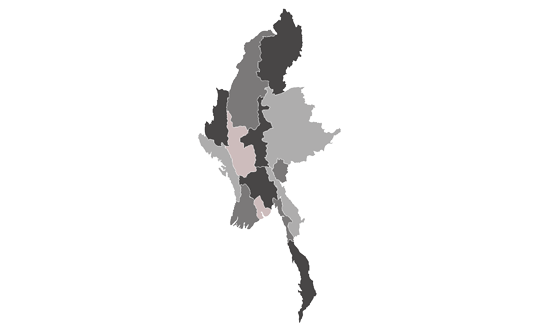
It should be apparent by now that GDP-contingent loans are beneficial for war-torn or crisis-struck countries, not just Ukraine now, but for example Greece in the aftermath of the 2008Global Financial Crisis, and Myanmar following the2025 earthquake. That is, they can be used as a stand-alone sovereign debt management tool for any country, providing a template for smarter, more resilient sovereign finance. This is because they balance the recipients need for sustainable debt repayment with the lenders need for fiscal prudence and the avoidance of default. And they do so to a much greater extent than GDP-linked bonds advocated by economistBen Shillerand others.
While GDP-linked bonds represent an improvement over conventional fixed-income instruments by tying repayments to a countrys economic performance, their typical bullet repayment structure where the full principal is repaid at maturity creates significant financial and political risks. This debt cliff forces the sovereign to either refinance or repay a large sum at once, which may be particularly challenging if the countrys fiscal position remains fragile or market access is constrained.
Counting the culprits, losers and victims of the Ukraine warHaving endured devastation by Russian forces for three years, Ukraine has seen its share of victims and political figures to blame for its devastating war.
The uncertainty surrounding repayment at a single point in time increases rollover risk and requires a steep risk premium from investors, especially if economic conditions deteriorate unexpectedly. In contrast, GDP-contingent loans with amortising repayment schedules distribute the debt burden more evenly over time and better align with a country's evolving repayment capacity.
For GDP-contingent loans to work as intended, it is critical that the administrative arrangements are suitable and allow confidence that the measures of GDP used for collection are accurate. Once more, we can use the comparison with the collection of student loans contingent on a graduates income, in which case, the national tax authorities are used to verify incomes, with repayments being assessed on this basis. For GDP-contingent loan collection, the expertise and independence of an established international financial institution such as the International Monetary Fund would be required. This would help avoid the potential moral hazard problem of the recipient country attempting to underestimate its GDP figures in order to reduce repayments.
In summary, GDP-contingent loans are advantageous to the borrower and the lender. They offer default insurance benefits to both, with the former also benefiting from income/consumption smoothing and the latter from easier political acceptance among voters of loans compared to giving non-repayable grants.
Let us, however, stress that while GDP-contingent loans provide a greatly needed fiscal flexibility and countercyclical management tool, they are not proposed to be the sole war-financing mechanism. The current EU loans, humanitarian aid and grants are welcome to support Ukraines war efforts and eventually post-war reconstruction. Estimates suggest hundreds of billions of dollars will be required for that purpose, a fact that reinforces the need for a more equitable and well-designed financial instrument.
DrJan Libichis an Associate Professor at La Trobe University and also affiliated withVSB-TU Ostrava. He holds a PhD in Economics from the University of New South Wales in Sydney.
Bruce Chapmanis an Emeritus Professor of Economics at the Australian National University, specialising in labour and education economics, and income-contingent loans.
Related Articles
- Putins war grows more savage as foreign allies join fight
- Counting the culprits, losers and victims of the Ukraine war
- Ukraine stands defiant against Trump and Putin's aggression
- What the Putin-Trump Ukraine meeting means for Australia
- Ukraines incursion into Kursk offers possibilities and difficulties