

Tamanna Ashraf
Download PDF
Aug 20 2025
2
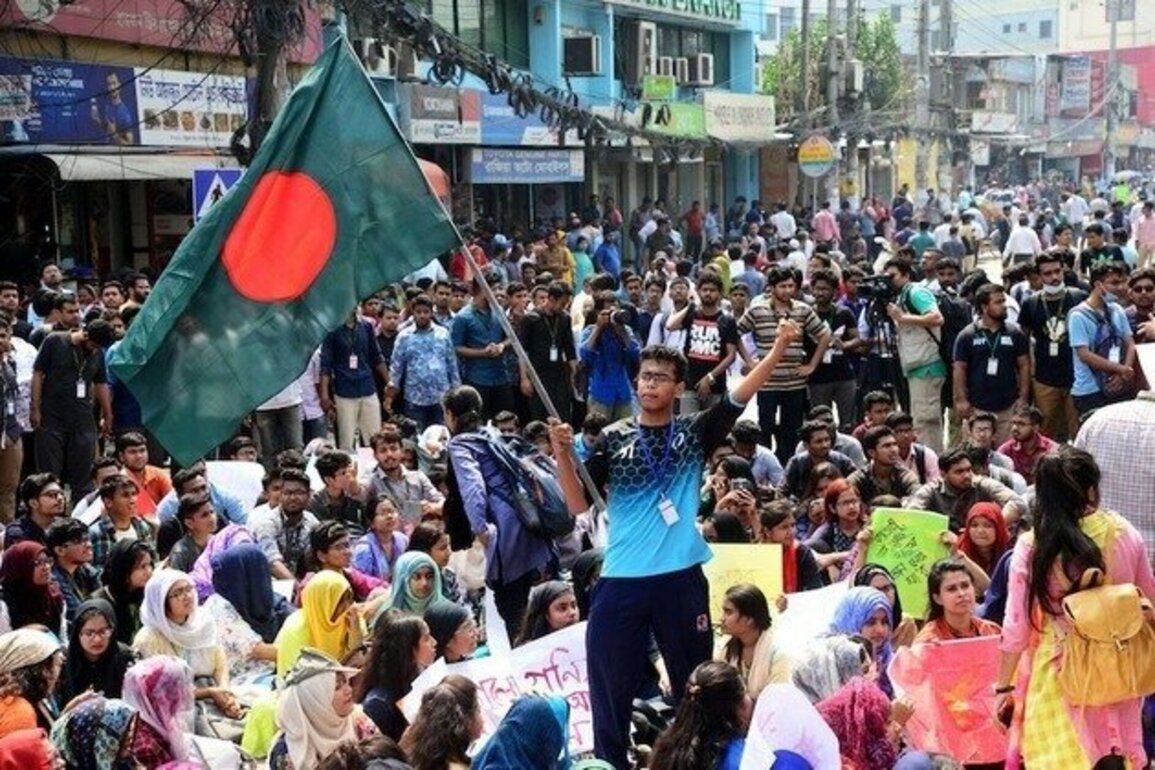
[email protected]/DepositphotosDr. Mohmmad Yunus, the Chief Advisor (CA) of Bangladeshs interim government revealed the July Declaration on August 5th, 2025, to commemorate the 1-year anniversary of the student-led revolution that toppled former Prime Minister Sheikh Hasinas 15-year Awami League (AL) regime. The essence of theJuly Declarationis to reflect the ambitions and goals of the Bangladeshi citizens for its future. The July Declaration highlights Bangladeshs political struggles since its independence in 1971 and emphasizes how that struggle has culminated in the July Revolution and its vision for the future. More specifically, the Declaration outlines the suppression of Bangladeshi peoples political and human rights by Hasinas regime, after 3 rigged elections, implicating the loss of the peoples mandate.
The past year encapsulates a critical period in Bangladeshs history and a stress-test of the Yunus administration. Although the July Declaration expresses the aspiration to build a country based on rule-of law, upholding human rights, and erasing corruption, the one-year tenure of Dr. Yunus reveals mixed levels of achievements. Since taking power, the interim government faced four crucial goals: to establish domestic security and stability, bring justice for the injured and deceased of the July Revolution, hold the corrupt members of the AL regime accountable, and to create a different economic and political vision for Bangladesh in the 21st century, especially for the young population.
It is important to recall that the students, facing bleak job prospects,protested against the Hasinas regimespolicy that allotted a disproportionate number of coveted government jobs to the descendants of freedom fighters of the 1971 war for independence. After more than a decade of corruption, mismanagement of government funds and bank reserves, Bangladesh was facinga dollar reserve crisisduring the last years of the Hasina administration. From the beginning, the interim governments challenge was to reverse the downward economic trajectory as part of new economic vision for Bangladesh.
After Hasinas fall, the former Governor of Bangladesh Bank alsofled the country. The current governors policies, combined with increased remittance, have improved dollar reserves. Externaldebts decreasedin the fourth quarter of December 2024, compared to the third quarter as a result of the interim governments cautious approach to foreign loans. The revival of the Chittagong Port andleasing part of the Portto a UAE-based company is intended to make Chittagong the economic heart of a new Bangladesh. Theinterim governments initiativesto expand Bangladeshs semiconductor industry also indicate an economic vision that is technology and youth centric.
The underlying theme of the July Revolution was to reinvent the country and its engagement with global partners. There have been significant changes Bangladeshs foreign policy since the 2024 revolution. One notable change is relationship with Western countries. TheBiden administration, theEuropean Union(EU),China, Pakistan, andIndiawere prompt to congratulate Dr. Yunus. Such messages gave legitimacy to the interim government, the students revolution, while recognizing Hasinas removal from power. UN Secretary General Antnio Guterressvisit during March 2025, brought renewed focus on the Rohingya refugee crisis, giving Bangladesh more agency on the issue. However, the UN (and therefore the U.S.) backed plan to establish a humanitarian corridor require tactful balancing between Chinese, American and Indian interests in the region. Admittedly, disagreements within the interim government, among the major political parties, and with the Bangladesh armed forces poses questions on whether the Yunus team can effectively carry out such a plan.
Dr. Yunuss engagement with Western and Asian partners centers on establishing Bangladeshs autonomy.Meeting with 19 EU delegates, he pushed for moving the visa centers from New Delhi to Dhaka or another neighboring country.Signing a Memorandum of Understanding with Chinaon the Teesta River crisis (after a 13-year stalemate with India) andcreating medical facilities in Chinato treat Bangladeshi patients (after India curtailed medical visas) point to a deepening ties with China and to showcase a more assertive engagement with global partners.
The previous examples also signal Bangladeshs pivot away from India. The flood inAugust 2024immediately after the revolution reinvigorated anti-India rhetoric and resurfaced frustration with perceived longstanding asymmetric hydro-diplomacy with India. But, most importantly, Hasinas continued presence in India remains a point of contention. Even after one year, India declinesrequestsfor Hasinas extradition citingsafety concernsand whether she will receive a fair trial in Bangladesh.
The current India-Bangladesh relationship presents a strategic challenge for India. Over the last few decades, Indias diplomatic relationship with Bangladesh has been limited to cooperative relationship with AL, neglecting maintaining diplomatic overtures with other political parties in Bangladesh. Consequently, significant portion of the Bangladeshi public perceived the AL party being overly friendly with India. Naturally, peoples dissatisfaction with Hasinas policies were also transferred to grievances against India.
The geographic reality implies that to address the persisting security concerns in the northeast Indian states (which includes Arunachal Pradesh, Assam, Manipur, Mizoram, Nagaland, Tripura, and Sikkim), the Indian government should pursue cooperative relationship with Bangladesh. In fact, Dr. Yunusconnected the revivalof the Chittagong Port and its significance for Indian northeastern states. Sheikh Hasinaspro-India stancehad allowed India to address security challenges in the northeastern states, without facing obstacles from Bangladesh. Political changes in Bangladesh necessitates the Indian government to realign its foreign policy and strive to form partnership with the people, instead of a singular political party.
Domestic politics is one of the areas where the Yunus administration has shown weak progress. Since the onset, the administration faced frequent protests fromgarment workers,bureaucrats, andsecurity forces. Even politically, reaching consensus on pressing issues is also becoming increasingly challenging. On the question of elections and electoral reforms, the divergence among the political parties and even splinters within the parties is becoming more visible. Pressure from leaders of the Bangladesh Nationalist Party (BNP) for earlier election raises doubts whether the interim government could accomplish its reform goals before theFebruary 2026 general elections. Fifteen years of ALs one-party rule has left BNP organizationally weak and divided. The newly createdNational Citizens Party (NCP)by the student leaders of the revolution is still consolidating its political base.
Disagreements between the Chief of Army Staff General Waker-Uz-Zaman and the interim government point to a lack of partnership.General Wakers insistenceof the role of the Bangladesh Riffles (BDR) in the 2009 Pilkhana Massacrestands at odds with the familiesof the victims who demand justice and answering lingering questions about Awami League regimes role. Such sentiments from families erode faith in the justice system.
The interim government has taken steps to provide financial and medical support for the survivors of the July Revolution suffering from various injuries and permanent disabilities. Unfortunately, the July Declaration does not mention the continuing suffering of the survivors. The role of female students in the July Revolution is also not mentioned in the Declaration, despitebeing on the frontlinesof the revolution. Such omissions do weaken the position of the domestic political reform agenda of the interim government and prevent it from giving these groups of people a sense of justice and inclusion in the new Bangladesh.
Ensuring a safe and stable environment, while establishing the rule of law is the biggest shortcoming of the Yunus administration. Awami League has not expressed any remorse in its role in the violence of the revolution despite mounting evidence. The activities of Awami League and its student wing have beenbanned. Nonetheless, the disgraced political party continues to cast a large shadow. Hasina continues to make inflammatory statements from her exile in India that fuelsnew violencein Bangladesh. Thearrest of Major Sadikuls wifeover allegations of plans to train AL activists to destabilize the capital creates bleak prospects of the countrys security and the realization of the July Declaration. Furthermore, the alleged involvement of the spouse of an army major in such nefarious plans creates more questions about whether the armed forces are reliable partners to fulfill the promise of the 2024 revolution.
At the one-year anniversary, the dream of the July Revolution remains unrealized. Dr. Yunus and his interim government have shown competence in addressing the economic challenges. Furthermore, changed engagement with Western and regional powers points to the desire to gain more agency over global and regional matters. Nonetheless, on the domestic political and security fronts, the interim government has shown problems with internal coordination and with other political stakeholders. Dr. Yunus has not proven himself to be a savvy politician. The utter corrosion of all institutions after 15-year corruption of Hasinas regime requires mini revolutions within all political stakeholders. Political rhetoric must go beyond political disagreements for its own sake and making abstract ideological statements to rile up supporters. The political parties must discuss tangible problems faced by the people and offer feasible solutions. Otherwise, the promise of the July Revolution will remain unfulfilled.
Further Reading on E-International Relations
- Opinion UN Secretary-Generals Visit Empowers Bangladesh
- Opinion The Future of the Bangladesh Awami League
- Opinion Injustice Paves the Way for Revolution: Lessons from Bangladesh
- Opinion The Path Forward for Bangladesh
- Opinion Counter-Terrorism and Intellectual Co-Optation in Bangladesh
- Opinion Rethinking the Precarity of the Hindu Minority in Bangladesh
About The Author(s)
Tamanna Ashraf, Ph.D. is a visiting assistant professor at the Department of English and an adjunct instructor at the Department of Politics and International Relations at Florida International University. Her research focuses on South Asian politics and water security in South Asia.
TagsBangladesh