

Shafi Md Mostofa and Tamim Muntasir
Download PDF
Jun 2 2025
1
[email protected] / DepositphotosIn the wake of Bangladeshs transformative mass uprising, the country finds itself grappling with a complex web of political instability, governance challenges, and strategic dilemmas. Among the most contentious issues to emerge has been the proposal for a humanitarian corridor along the Bangladesh-Myanmar bordera seemingly straightforward humanitarian initiative that has exposed deep fractures within Bangladeshs interim government and highlighted the countrys precarious position amid intensifying great power competition in the Bay of Bengal. The humanitarian corridor controversy began on April 7, 2025, when National Security Advisor Khalilur Rahmanpublicly revealeddiscussions with the UN Secretary-General regarding Bangladeshs potential involvement in establishing a humanitarian channel to deliver aid to Myanmars war-torn Rakhine region. However, what should have been a coordinated policy announcement quickly devolved into a series of contradictory statements that exposed the interim governments internal dysfunction.
Foreign Affairs Advisor Touhid Hossain subsequentlyannouncedBangladeshs decision to establish the corridor under certain conditions, only for Press Secretary Shafiqul Alam tocategorically denyany discussions with the UN or other organizations on the matter. This confusion deepened when Rahman later held a separate press conference on April 22,denyingany corridor discussions while simultaneously acknowledging talks about a humanitarian channelcreating artificial distinctions that further muddied the waters. Perhaps most telling was the public disagreement between Rahman and Army Chief General Waker-Uz-Zaman. While Rahman claimeddetailed consultationswith military leadership, the Army Chief stated he had not been consulted and suggested such decisions should be left to an elected government. This contradiction reveals either concerning exclusion of military voices from national security matters or fundamental misalignment between civilian and military leadership on critical sovereignty issues.
The confusion surrounding Bangladeshs position becomes even more problematic when viewed against the broader geopolitical context of Rakhine State. The region has become a focal point of the China-Myanmar Economic Corridor, featuring the strategicKyaukphyu Deep-Sea Porta flagship project of Chinas Indian Ocean strategy developed in partnership with Myanmars military junta. Additional infrastructure projects, including submarine facilities and rail connections to Kunming, underscore Chinas significant strategic investment in maintaining access to the Bay of Bengal through Myanmar.
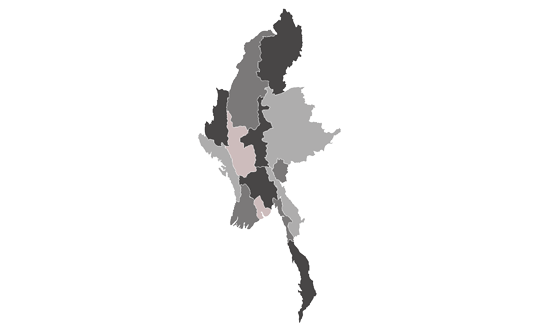
Currently, while the Arakan Army controls approximately 90% of Rakhine State, the Myanmar military retains control over three critical locations: the state capitalSittwe, the Chinese-backed Kyaukphyu port, and Manaung Island. These remaining strongholds represent Chinas last footholds in a region that has become central to its maritime strategy. Any further Arakan Army advances would constitute a major strategic setback for Beijings Indian Ocean ambitions. This dynamic has created a complex overlay of competing interests. The United States, throughthe Burma Act,has signaled support for pro-democracy movements and anti-junta forces, effectively backing groups like the Arakan Army as part of a broader China-containment strategy. From Beijings perspective, any assistance that could strengthen the Arakan Armys positionincluding humanitarian aid that might indirectly support their operationsrepresents a threat to Chinese strategic interests.
That said, the humanitarian corridor debate illustrates a classic case ofconstructivist international relationstheory in action. While Bangladesh may genuinely intend to provide humanitarian assistance to suffering populations in Rakhine, China is likely to interpret such actions through the lens of U.S. containment strategy and the Burma Act. In this constructed reality, Bangladeshs humanitarian motivations become secondary to perceived geopolitical alignments. This interpretation carries serious implications for Bangladeshs security. The Myanmar junta, viewing any aid as potentiallystrengthening Arakan Army capabilities, may resort to disruptive measures. Although the junta no longer controls border areas with Bangladesh, it retains air power capabilities, including a strategic air base in Kyaukphyu equipped to operate advanced fighter aircraft. The threat of airstrikes against humanitarian supply routes represents a tangible security risk that Bangladesh must consider.
Moreover, Indias interests further complicate the regional equation. New Delhis commitment tothe Kaladan Multimodal Transport Transit projectconnecting Kolkata to Sittwe through collaboration with Myanmars juntaaligns Indian interests with maintaining stability in junta-controlled areas. The project has gained added importance following the suspension of transit facilities through Bangladesh, making India reluctant to see Arakan Army control extend to Sittwe. Indian media narratives framing Bangladeshs 2024 uprising as a U.S.-sponsored regime change program create additional complications. Any Bangladeshi involvement in humanitarian corridors would likely be portrayed through this lens, intensifying pressure on India to balance its U.S. alliance commitments with its Myanmar interests. Having said this, the student-led mass uprising that transformed Bangladeshs political landscape has created newaccountability mechanismsand public expectations for government transparency. The corridor controversy has sparked significant domestic criticism, with political parties calling for broader consensus on sovereignty-related matters. This democratic pressure, while healthy, adds complexity to foreign policy decision-making in an already unstable political environment.
Taking stock, Bangladesh faces a fundamental strategic choice between humanitarian impulses and geopolitical realities. While the countrys commitment to humanitarian assistance is commendable, maintaining strategic neutrality remains crucial. In an increasingly contested region, even well-intentioned initiatives can be interpreted as aligning with broader power dynamics. Clear communication and diplomatic engagement will be essential in ensuring Bangladeshs humanitarian efforts are not misconstrued as taking sides in global rivalries. Additionally, considerations such as a potential no-fly zone over the Bay of Bengal and the risk of misuse by non-state actorsincluding rebel groups and criminal organizationsunderscore the need for stringent security measures and careful policy planning. Historically, similar corridors have been exploited for illicit activities, including arms trafficking and organized crime, making vigilance and strong regulatory oversight critical in preventing unintended consequences. Safeguarding the corridor from these risks will require Bangladesh to establish a robust monitoring framework that ensures aid reaches its intended recipients without compromising national security.
Given Bangladeshs limited military capabilities and pressing economic recovery needs following the mass uprising, prioritizing domestic reconstruction and democratic transition remains the most prudent course of action. The country must focus on stabilizing its political environment and strengthening its institutions to build long-term resilience. Rather than becoming entangled in geopolitical rivalries, Bangladesh should channel its resources into fostering economic partnerships that enhance its role as a cosmopolitan hub in the Bay of Bengal. Strategic investments in infrastructure, trade, and regional cooperation could position the country as a key player in the emerging economic landscape while maintaining its neutrality.
The humanitarian corridor controversy has revealed more than policy confusionit has underscored the delicate balance Bangladesh must strike between humanitarian responsibilities and strategic imperatives. Moving forward, stronger internal coordination and a nuanced understanding of regional geopolitics will be key to ensuring Bangladesh upholds both its humanitarian values and its national interests in an evolving and complex international environment. Through inclusive decision-making, transparent policy discussions, and a well-defined strategic approach, Bangladesh can successfully navigate these challenges while safeguarding its sovereignty and stability.
Further Reading on E-International Relations
- Opinion The BNPs Dilemma in Bangladeshs New Political Landscape
- Opinion Bangladesh at the Centre of Australias Focus on the South
- Opinion Sovereignty First: US Support on Bangladeshs Terms
- Opinion Injustice Paves the Way for Revolution: Lessons from Bangladesh
- Opinion The Future of the Bangladesh Awami League
- Opinion UN Secretary-Generals Visit Empowers Bangladesh
About The Author(s)
Shafi Md Mostofa, Ph.D., is an associate professor of World Religions and Culture at the University of Dhaka and a post-doctoral research fellow at the Democracy Institute of the Central European University, Hungary.
Tamim Muntasiris a researcher at Dacca Institute of Research and Analytics (daira), specializing in geopolitics and international relations in the Indo-Pacific region. His work has been featured in renowned journals such as Asian Security (Routledge).
TagsBangladeshChinaMyanmar