

India, China, the United States, Russia and Pakistan Facing the New Balance of the Bay of Bengal
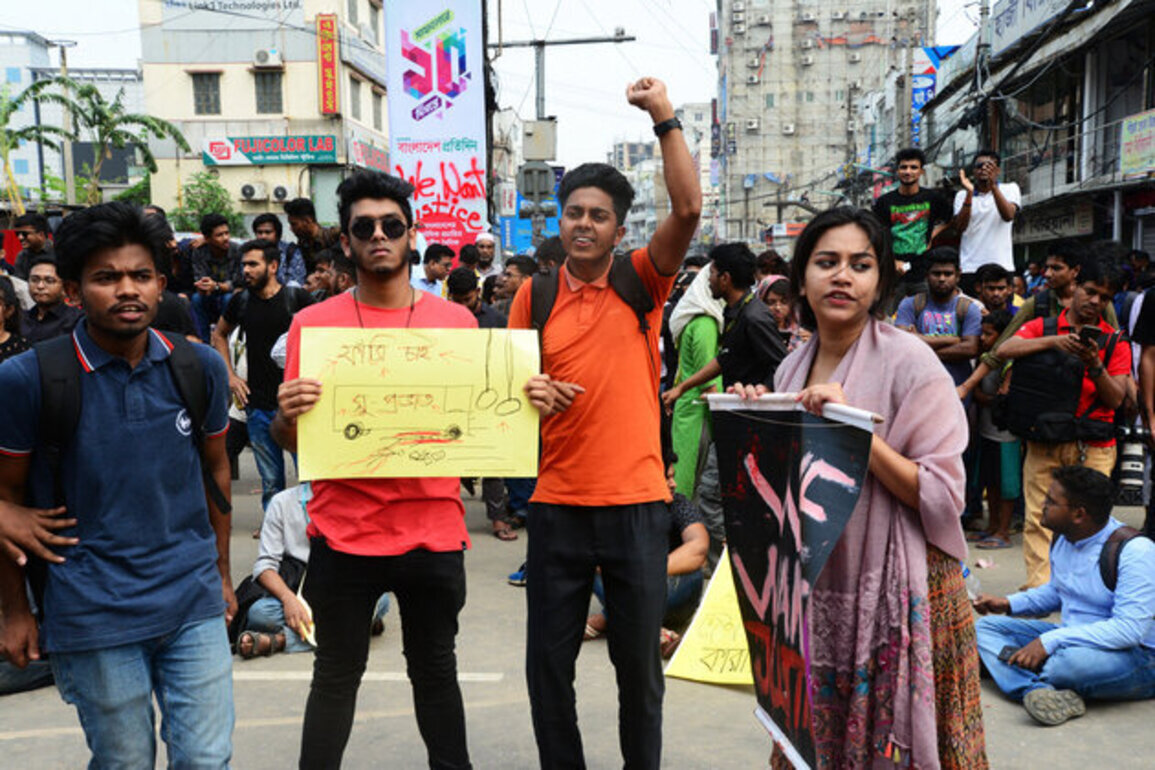
Bangladeshhas just entered a decisive stage. After the fall of Sheikh Hasina in August 2024, her exile in India, the transition led by Muhammad Yunus and the subsequent victory of the Bangladesh Nationalist Party, the country ceased to be a domestic news story and became a larger piece on the Asian chessboard.
The death sentence in absentia against Hasina for crimes against humanity linked to the repression of the 2024 protests brutally closed one political cycle, but opened another far more uncertain one.
Bangladesh is not a peripheral country. It has more than 170 million inhabitants, access to the Bay of Bengal, a textile industry that exports more than US$50 billion annually and a sensitive location between India, China, Myanmar and the routes of the Indo-Pacific. That is why, when power changes in Dhaka, it is not only a government that changes.
A regional equation changes.
Indiawatches with attention and a certain discomfort. Hasina was for years a known interlocutor for New Delhi. Her fall forced India to recalculate border, trade, security, Hindu minorities, migration and political balance in its own neighborhood. Bangladesh is not far from India. It is inside its strategic breathing.
Any turn in Dhaka is felt in Kolkata, Assam, Tripura and throughout Indias northeast.
Chinaobserves from another logic. Beijing does not need long speeches to understand the value of Bangladesh. It sees ports, energy, infrastructure, manufacturing, maritime routes and access to the Bay of Bengal. For China, a stable Bangladesh can be an economic partner and a foothold in the Indo-Pacific.
A fractured Bangladesh, by contrast, can open space for interference, Indian pressure or Western maneuvering.
The United Statesenters with its usual language of democracy, human rights and institutional transition. But Washington also looks at the map. Bangladesh lies in a zone where China, India, Myanmar and Asian maritime routes intersect.
On that board, every election, every protest and every crisis of legitimacy can become a signal within the larger competition with Beijing.
Russiaappears more silent, but not absent. Moscow looks at Bangladesh through its relationship with South Asia, its link with Myanmar and its interest in showing that the world no longer revolves under a single Western authority. It does not need to dominate Dhaka to read the opportunity.
It is enough to observe how each Asian crisis erodes the old architecture of influence.
Pakistanis also watching. And not only through diplomatic calculation. Bangladesh was born from the bloody rupture with Pakistan in 1971. That history remains under the skin of South Asia. Islamabad observes any change in Dhaka as part of the larger triangle with India and China.
In a region where memory never retires, the past also makes geopolitics.
The new government will have to show whether it can bring order to the country without repeating the vices of the previous power. Electoral victory may deliver a parliamentary majority, but it does not by itself guarantee reconciliation, justice or stability. Hasinas fall left open wounds, anxious minorities, a reorganized opposition, mobilized youth and an economy that needs employment, investment and confidence.
There lies the uncomfortable point. Bangladesh cannot afford to become another transition captured by revenge, sectarianism or external tutelage. Its demographic, commercial and maritime weight forces it to walk on a tightrope. If it leans too far toward India, China will observe. If it moves too close to China, India and the United States will react.
If it falls into internal disorder, all the lions will enter with advice, loans, warnings and smiles.
Hard Figures
China committed in 2025 around US$2.1 billion in loans, investments and grants to Bangladesh during Muhammad Yunuss visit to Beijing.
Accumulated Chinese direct investment in Bangladesh reached about US$2.67 billion by September 2024, including mainland China and Hong Kong.
Over the past decade, China reportedly released around US$4.45 billion for 35 BRI projects in Bangladesh, while Chinese companies received contracts worth about US$22.94 billion.
Closure
Bangladesh looks like a democracy breathing again after a long suffocation. But breathing is not the same as healing. The country will have to prove whether it can transform the fall of a regime into a real democratic architecture, and not merely the replacement of one elite by another.
Because the day after Hasina does not belong only to Bangladesh. It also belongs to the Bay of Bengal, to the Indo-Pacific and to that geopolitics where the powerful never arrive late when the map begins to move.
Brief Bibliography
Reuters / PBS NewsHour Sheikh Hasina sentenced to death in absentia for crimes against humanity, 2025.
International Crisis Group Bangladeshs New Government Gets Down to Business, 2026.
Mauricio Herrera Kahn