


THE HAGUE, Netherlands (CN) - Years after reports of mass killings and forced expulsions shocked the world, a historic case is finally being heard in The Hague, where judges at the International Court of Justice will decide whether Myanmar violated its obligations under the 1948 Genocide Convention toward the Rohingya.
Brought by Gambia, the case concerns Myanmar's treatment of the Rohingya minority and asks the world's highest court to determine whether the state violated the Genocide Convention - a postwar treaty that obliges countries to prevent and punish the crime of genocide - and, if so, what its international obligations require.
The hearings opened on a procedural note, with judges laying out a tight schedule that signals the start of a substantive phase in the case. Over the coming weeks, the court will hear full arguments from both sides, formally moving the dispute beyond preliminary skirmishes and into a detailed examination of the genocide case.
In his opening remarks, Gambian Justice Minister Dawda Jallow said his country brought the case out of "a sense of responsibility" after its own experience with a military government. "We must use our moral voice in condemnation of oppression, of crimes against individuals, and of groups, wherever and whenever they occur," he said, addressing a full courtroom.
From diplomatic outrage to legal showdown
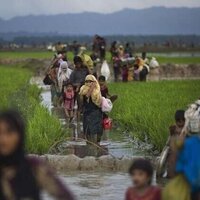
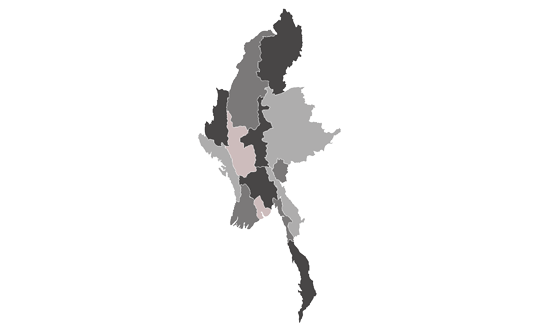
The roots of the case lie in Myanmar's western Rakhine State, home to the Rohingya, a Muslim minority long denied citizenship and basic rights in a predominantly Buddhist country. Tensions escalated after militant attacks in 2016 and 2017, when Myanmar's military launched sweeping "clearance operations" that sent hundreds of thousands of Rohingya fleeing across the border into Bangladesh. More than 1 million Rohingya still live in exile in crowded camps.
United Nations investigators later documented a pattern of killings, sexual violence, mass displacement and the destruction of entire villages, concluding that the operations were carried out with a level of brutality that raised alarms about possible genocide.
The Southeast Asian country, which has since been taken over by the military, denies the charges.
The legal battle reached The Hague in November 2019, when Gambia filed its case at the world court, accusing Myanmar of violating the Genocide Convention. The move marked a major escalation, shifting the dispute from diplomatic condemnation to formal international litigation.
The court moved quickly. Within weeks, judges imposed provisional measures, ordering Myanmar to prevent acts prohibited under the convention and to safeguard evidence. Those measures remain in place today, backed by a requirement that Myanmar regularly report on steps taken to comply, underscoring how seriously the court viewed the risks raised by the case.
The case cleared a major procedural hurdle in July 2022, when judges confirmed the court's authority to hear it and allowed Gambia's claims to move forward, rejecting Myanmar's effort to have the proceedings dismissed at an early stage. The decision cleared the way for South Africa's claim of genocide against Israel at the end of 2023.
In July 2024, the court broadened the legal conversation by allowing a group of states - including Canada, France, Germany, the Netherlands and the United Kingdom - to intervene on how the Genocide Convention should be interpreted.
With those procedural questions settled, the merits phase now turns to the substance of the case: whether Myanmar's conduct can legally be characterized as genocide, whether acts prohibited by the convention were committed, and whether responsibility for those acts can be attributed to the state.
What the judges will decide
The hearings revolve around a narrow but consequential set of legal questions.
One key issue is intent. Judges must decide how genocidal intent should be assessed at the level of state responsibility, including whether the actions of Myanmar's military can be linked to an intent to destroy a protected group, in whole or in part, and whether that intent can legally be attributed to the state itself.
Another question is whether the conduct described, such as killings, forced displacement and the living conditions imposed on the Rohingya, fits within the acts banned by the Genocide Convention.
A third issue concerns the scope of Myanmar's obligations under the treaty, not only to refrain from committing genocide, but also to prevent and punish it, raising the question of whether failures to act can themselves amount to a breach of the convention.
Those questions are grounded in the court's jurisdiction under the Genocide Convention, which allows states to bring disputes over compliance with the treaty directly before the world court.
Managing expectations
The hearings now underway will stretch over several weeks, with Gambia, Myanmar and an unusually large group of intervening states laying out their arguments. Once the oral phase ends, judges will deliberate behind closed doors, a process that can take years.
The case, however, is not a criminal trial. The International Court of Justice does not judge generals or politicians, and it cannot impose prison sentences. Its task is to determine whether Myanmar bears responsibility under international law and, if so, to spell out the legal consequences that follow.
Whether the court ultimately finds Myanmar in breach of the Genocide Convention remains an open question. What is already clear is the weight of the proceedings: a rare, full merits examination of claimed genocide obligations before the U.N.'s highest judicial body, with global implications for how state responsibility for the gravest international crimes is assessed.
Courthouse News reporter Eunseo Hong is based in the Netherlands.
Source: Courthouse News Service