


(Note: A complete summary of today's General Assembly meetings will be made available after their conclusion.)
United Nations Special Envoy for Myanmar Warns Elections Could Trigger Unrest
As the Rohingya flee brutal attacks and persecution in Myanmar, speakers at the General Assembly today called for safe zones, sustained international support and justice, including by referring the situation to the International Criminal Court.
A high-level meeting on the crisis facing Rohingya Muslims and other minorities in Myanmar — convened pursuant to a General Assembly resolution in fall 2024 — seeks to sustain international attention, assess conditions on the ground and discuss a concrete, time-bound plan for a sustainable resolution, including steps to ensure the voluntary, safe and dignified return of displaced persons.
In her opening remarks, Annalena Baerbock, President of the General Assembly, recalled that over the past eight years, millions of Rohingya have been violently displaced from what they once knew as home. “They fled with children on their backs, with nothing but the money in their pockets,” she said, noting that many have been forced to live in refugee camps, with boys and girls spending their entire childhood in tattered tents. Over 3.5 million Rohingya inside Myanmar desperately need humanitarian assistance. Bangladesh, already hosting 1.1 million Rohingya, “cannot shoulder this burden indefinitely”, she warned.
On the dire situation in Cox’s Bazar — location of the world’s largest refugee camp — she described how even access to water is scarce. One young refugee put it starkly: “If water is life, then life here is on hold — because it doesn’t flow where it should.” Yet, the 2025 Humanitarian Needs and Response Plan for Myanmar is only 12 per cent funded. “Rohingya men, women and children have not chosen to live in refugee camps,” she stressed. “Our response must match [their extraordinary resilience].”
“The systematic architecture of genocide against the Rohingya has shaped my deep commitment to justice,” said Rofik Husson, Founder of the Arakan Youth Peace Network. Despite decades of persecution, Rohingyas wish to live peacefully with diverse communities in their homeland. Ending their insecurity is “a test for this Assembly and a test for humanity itself”, he said, calling for an UN-supervised safe zone in northern Rakhine State and cross-border humanitarian corridors from Bangladesh.
From Refugee Camp to New York University
Maung Sawyeddollah, Founder of the Rohingya Students Network, said that he is the first Rohingya from a refugee camp in Bangladesh to study at New York University. But he may be forced to abandon studies without financial aid and is urging international support for Rohingya students. “There are hundreds of Rohingya students like me in the refugee camp in Bangladesh forced to destroy their futures with no access to higher education,” he said. “It’s not a big burden for a university to offer one or two scholarships to Rohingya students in an academic year […]. It’s also not a big burden for a Member State to offer a few scholarships to Rohingya students annually,” he implored.
Lucky Karim, Executive Director of Refugee Women for Peace and Justice, recounted fleeing as a 14-year-old girl to Bangladesh. Genocide is continuing, and there is a long road ahead before the Rohingya can return home, she said. She urged frank discussion about conditions for return: How can refugees go back amid ongoing starvation in Rakhine State, or achieve coexistence after trauma? “Amidst many competing crises, we are concerned that our plight will fall by the wayside,” she warned, but she affirmed that Rohingya themselves want to lead in shaping solutions, with international support.
“This conference must be the beginning of change, of a lasting solution over a temporary fix,” said Wai Wai Nu, Founder of the Women’s Peace Network. She called for immediate protection of Rohingya through a humanitarian corridor along the Myanmar-Bangladesh border, targeted sanctions against perpetrators of mass atrocities, and engagement with the pro-democracy movement. “Justice is not optional. It is the only deterrent, the only path to peace,” she said, urging that humanitarian assistance be expanded and that host countries allow refugees to work and study.
Mixed Views on December Elections
Julie Bishop, Special Envoy of the Secretary-General on Myanmar, said that the initial international condemnation of the military takeover has subsided, and Senior General Min Aung Hlaing has been welcomed to high-level regional meetings with global and regional leaders, adding that his visits included travel to the capitals of Security Council members and that reference was made to instances of lifting sanctions.
On planned elections starting 28 December in 102 townships under tightened security, she said: “Views of ASEAN [Association of Southeast Asian Nations] members range from strident opposition to the holding of elections under current circumstances, to resignation to the inevitable, to vocal support for elections as a potential circuit breaker,” she observed, cautioning: “There is a significant risk that the election planned for December, under current circumstances, will increase resistance, protest and violence and further undermine the fragile state of the country.”
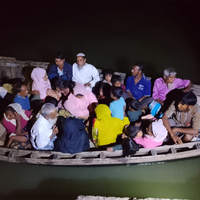
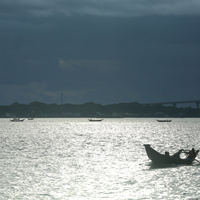
Filippo Grandi, United Nations High Commissioner for Refugees, described the Rohingya’s plight as “somewhat unique — not only do they continue to be discriminated, deprived of rights and abused, but they are also caught in one of several ethnic conflicts affecting the country”. He recalled that 750,000 fled after “unspeakable violence” by Myanmar’s military, while those who remain face “the burning of their villages, exclusion from work and services, the continuous denial of their very identity”. Today, 5.1 million are displaced, including 1.6 million abroad. The humanitarian response remains “chronically underfunded”, he said, stressing the looming risks of “children dying of malnutrition, or people dying at sea as more refugees embark on dangerous boat journeys”.
Tan Sri Othman Hashim, ASEAN Special Envoy on Myanmar, noted that Rakhine State continues to bear the brunt of conflict, compounding a plight that predates the 2021 coup. “Inclusive dialogue is a key imperative in finding a peaceful resolution to the crisis in Myanmar,” he said, but Rohingyas and other minorities are often excluded because they are not recognized as ethnic groups. “The situation in Myanmar, particularly the plight of Rohingya and other minorities, must be reversed,” he underlined, calling for an immediate end to violence, scaled-up humanitarian funding, and safe, voluntary and dignified return for refugees.
Life in Myanmar ‘Another Grim Chapter’ in History
Volker Türk, United Nations High Commissioner for Human Rights, described life in Myanmar as maybe “the worst it has ever been for the Rohingya and other minorities, marking another grim chapter in the long history of persecution”. He noted “utter hopelessness” in the eyes of women and girls he met in Rakhine State. Meanwhile, elections planned by the military “can be neither free nor fair” as Rohingya stripped of citizenship will not be allowed to vote. “The way out of this crisis is through de-escalation, protection of civilians and humanitarian access — not elections,” he said, urging sustained support for refugees in Bangladesh and referral of the situation to the International Criminal Court.
Courtenay Rattray, Chef de Cabinet of the Executive Office of the Secretary-General, speaking on behalf of UN chief António Guterres, highlighted the plight of the Rohingya, stripped of citizenship, confined to camps with little access to basic services and forced to flee to Bangladesh in large numbers. “It is not enough to take stock of the status quo,” he said, stressing that “we must also foster solidarity and forge solutions”.
...
Follow our live coverage of the General Assembly here .